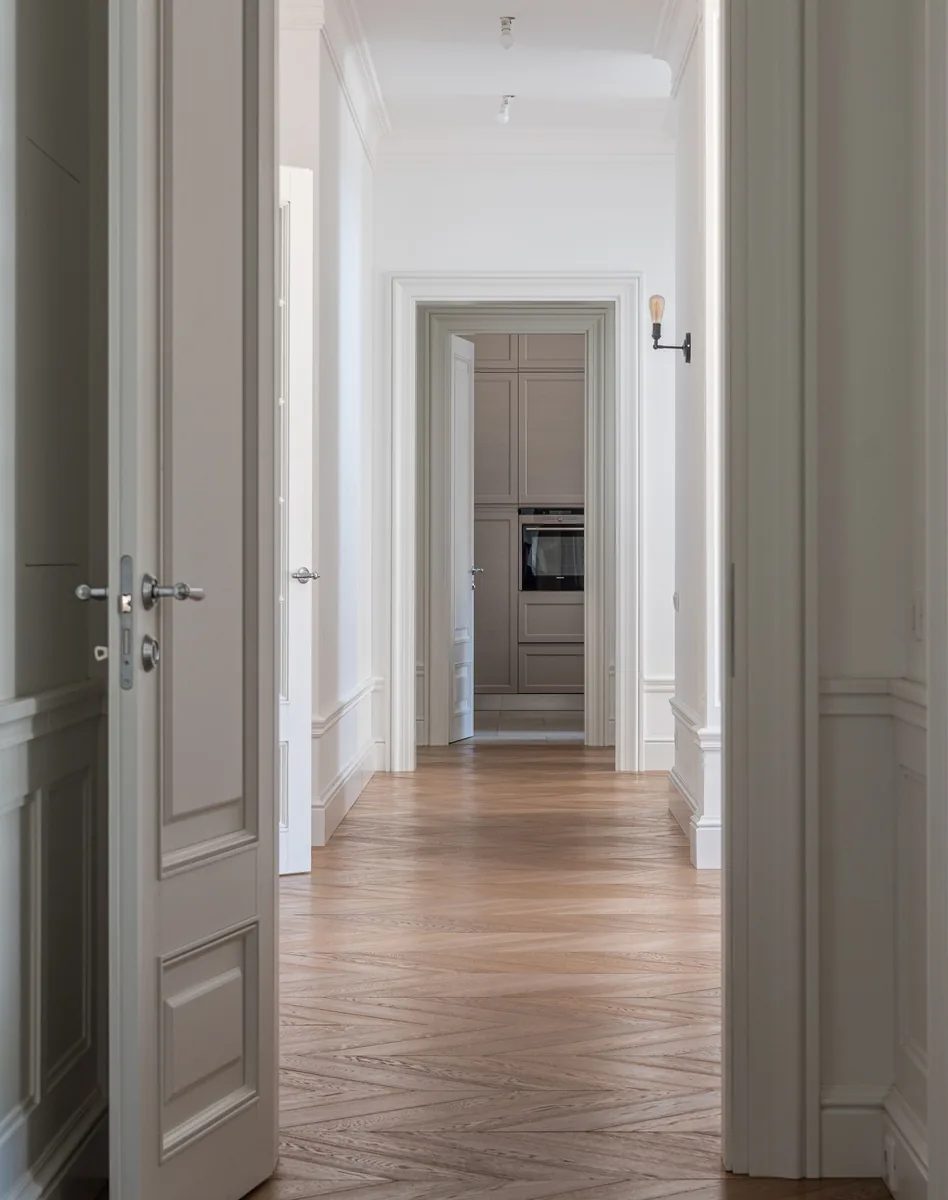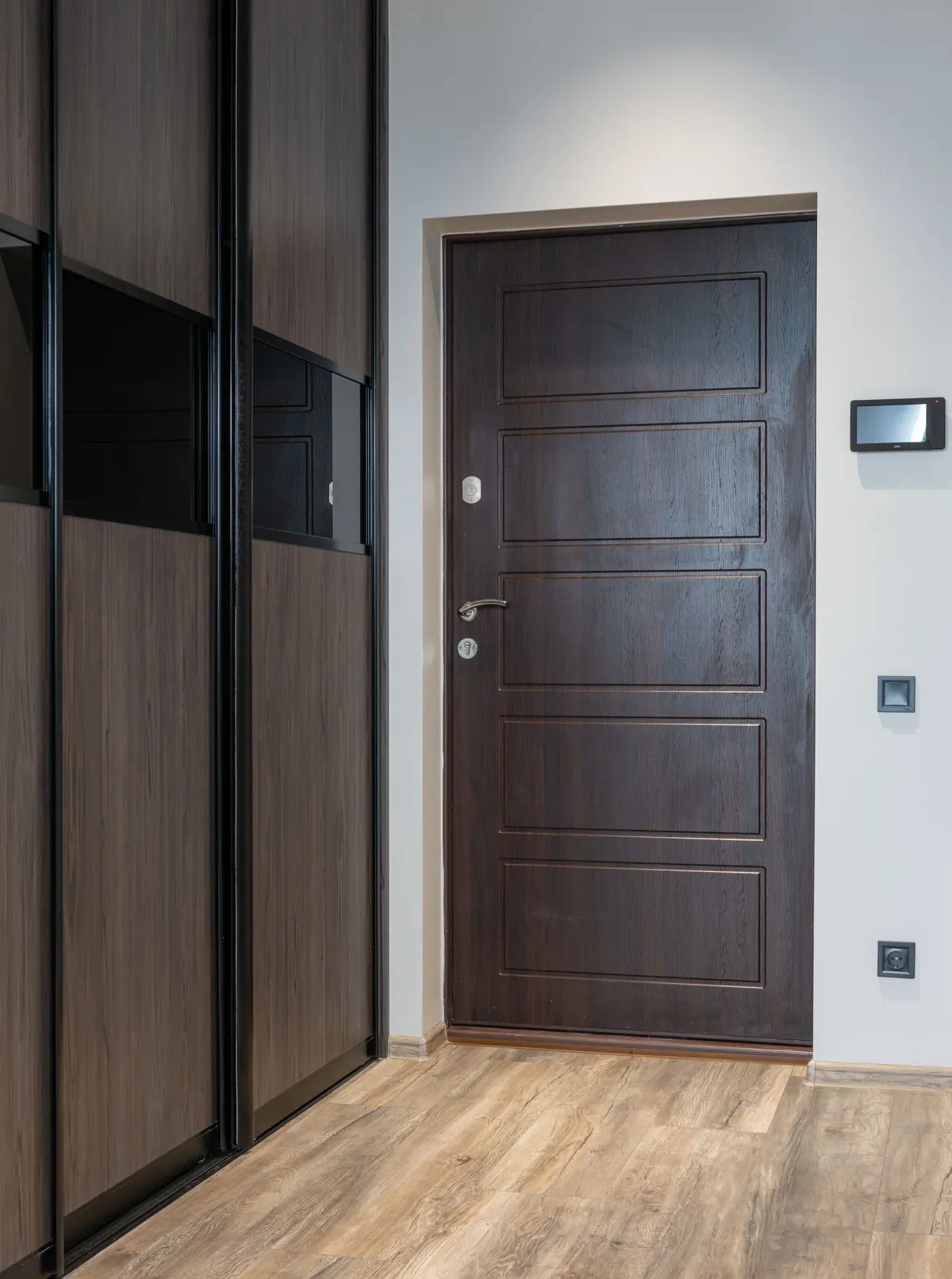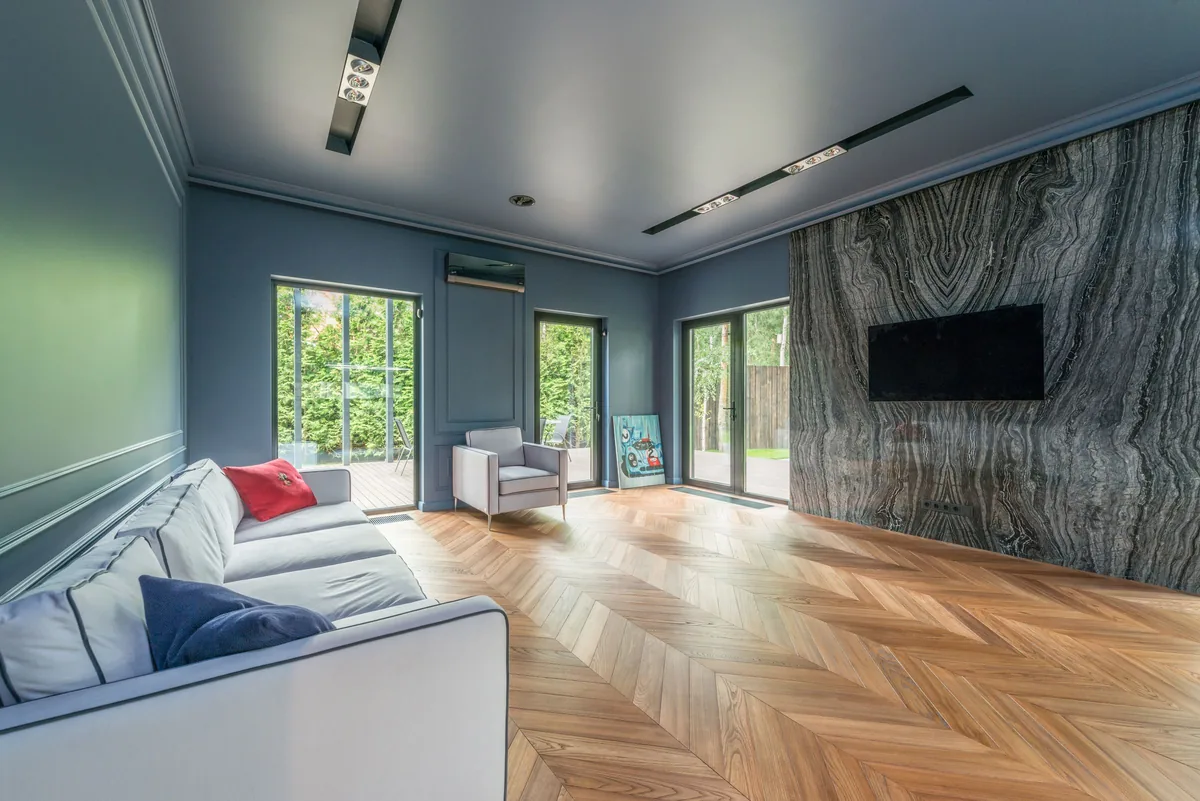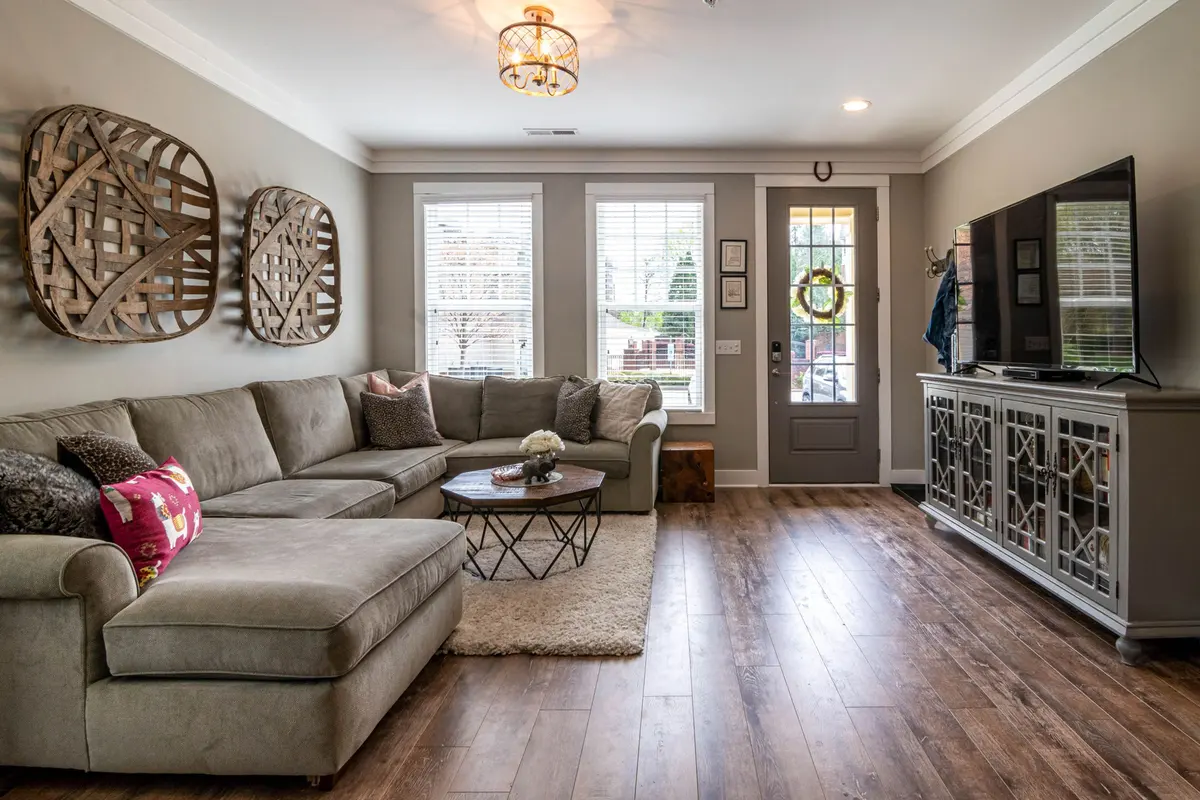
Put a luxury vinyl plank and a laminate plank side by side on a rack and most people cannot tell which is which. They are priced in overlapping ranges, they both click together, they both do a convincing impression of wood, and they are both sold as the practical modern floor.
Then you get them home and they behave like different products, because they are. Here is what actually separates them and how to pick.
The difference is the core, and everything follows from it
**Laminate has a wood core.** Specifically high-density fiberboard - wood fiber compressed under heat and pressure - with a photographic layer printed to look like timber and a hard transparent wear layer on top, usually containing aluminum oxide. That wear layer is what you walk on, and it is genuinely tough.
**Luxury vinyl has no wood in it at all.** The core is a PVC-based composite. You will see two families: SPC, a stone-plastic composite that is dense, rigid and very stable, and WPC, a wood-plastic composite that is thicker, softer and warmer underfoot despite the name. On top sits a printed film and a clear vinyl wear layer measured in mils.
Almost every practical difference between the two comes back to that one fact. One has a wood-fiber core and one does not.
Water is the first and biggest split
This is where the categories genuinely separate, and it decides most purchases.
Luxury vinyl is waterproof through the body of the plank. Water sitting on it does not swell the core, because there is nothing in the core to swell. That does not make the *installation* waterproof - water can still run to a seam, get underneath and sit on the subfloor, which is its own problem - but the plank itself survives.
Traditional laminate does not. Fiberboard absorbs water, and when it does the core swells, the edges lift and the plank stays that way. It is not repairable, only replaceable. A laminate floor that has taken a standing spill at a dishwasher or a shower door will show it permanently.
There is now genuinely waterproof laminate built on a different core, and it is a real product rather than a marketing line. But it is a *specific* product, not a property of laminate in general. If you want laminate anywhere water is likely, get that confirmed in writing. The same warning applies in a wet room, which is why what actually survives a bathroom is worth reading before you commit.
Scratches and dents pull in opposite directions
People assume one floor is simply tougher. It is not that clean.
**Laminate resists scratching better.** The aluminum-oxide wear layer is harder than a vinyl wear layer, and against the things that actually scratch floors - grit tracked in on shoes, dog claws, a chair dragged across a room - laminate holds up noticeably well. If your main worry is a large dog and a lot of foot traffic through dry rooms, this is a real point in laminate's favor.
**Luxury vinyl resists denting and impact better, with one exception.** Vinyl is more forgiving when something heavy is dropped on it; laminate can chip at an edge. But vinyl is softer, so sustained point loads press into it - the feet of a heavy appliance, a piano leg, a bar stool that lives in one spot. Rigid SPC cores are much better at this than softer ones, and it is worth asking which core you are being quoted.
So: laminate for surface scratching, vinyl for impact, and be careful with vinyl under anything heavy that never moves. If the heavy user of your floors is a dog, the best flooring for dogs compares every material on claws, water and accidents.
Sound and feel underfoot
Laminate over a slab can sound hollow and clicky. That is not a defect, it is a hard fiberboard plank floating over concrete, and a good underlayment is what fixes it. Skimping on underlayment under laminate is the most common way to end up disliking a floor you otherwise chose well.
Luxury vinyl is quieter and warmer, particularly the thicker WPC constructions, and many products come with a pad already attached. In a two-story house, or anywhere someone is sleeping under the room, that difference is worth something.

Sun and heat, which matters more here than most places
A room with a wall of west-facing glass and no shading gets genuinely hot in a North Texas summer, and the two products react differently.
Vinyl moves with temperature more than laminate does. In a hot, bright room a vinyl floor expands, and if the expansion gap at the perimeter was pinched it has nowhere to go - which shows up as lifted seams or a plank peaking. Vinyl plank floor problems covers peaking and the other common failures. Rigid SPC is far more stable in heat than flexible or thinner vinyl, and it is the right specification for a sunroom or a room with large unshaded glazing.
Laminate is more dimensionally stable in heat, but its printed decor layer can fade under prolonged direct UV.
Either way, ask what the manufacturer says about direct sunlight, and do not let anyone caulk the expansion gap shut. How a floor is finished at the walls and doorways covers why that gap exists.
Both go over a slab, and both need the slab to be right
Nearly every house around here sits on concrete, and both of these floors are usually installed floating - not fastened down - over it.
Two things matter and they matter equally for both. **Flatness**, because a floating floor over a wavy slab flexes at the high spots and the joints eventually fail, and thin planks telegraph every dip. And **moisture**, because a slab passes vapor upward continuously.
Vinyl tolerates slab moisture better than laminate, for the same reason it tolerates spills better. But neither should go over an untested slab, and both should go over a flat one. That is prep work, it is a real line on a quote, and what happens when the old floor comes up is where it lives. The moisture question is covered properly in what a North Texas slab does to a floor.
Cost, and the number that actually matters
The two categories overlap so heavily that the category is a poor guide to price. Grade within each is what moves it.
For luxury vinyl, ask for the **wear layer in mils**. Entry-level residential product runs thin; heavier residential and commercial-grade product runs considerably thicker, and that single number predicts how it ages better than the price does.
For laminate, ask for the **AC rating**, which measures abrasion resistance and runs from light residential up through commercial.
Two quotes both saying "luxury vinyl plank" can be very different floors. Get the manufacturer, the product name and the grade on each one, and then you are comparing floors instead of adjectives.
Which one, room by room
**Kitchens, bathrooms, laundry rooms, mudrooms and entries:** luxury vinyl. The water argument decides it, and it is not close unless you have specifically bought waterproof laminate.
**Bedrooms, living rooms, hallways, offices:** either works. Choose on feel and on what your household does to floors.
**A household with big dogs, in dry rooms:** laminate has a genuine edge on scratch resistance.
**A whole main floor that includes a kitchen:** luxury vinyl, so the whole floor runs in one material through the wet area without a change of product.
**A sunroom or a room with a lot of unshaded west-facing glass:** rigid SPC vinyl, or laminate, and ask about UV either way.
**Upstairs over bedrooms:** vinyl, for the sound.
If the floor you are replacing came with a new Forney house, replacing builder-grade flooring in a Forney new build covers what the builder put in and what goes over it.
Seeing them next to each other
The reliable way to decide is to hold both in the room they are going into, at the times of day you are actually home. Plank width, sheen and how convincing the grain looks all read differently under a Texas afternoon than under showroom lighting, and the two products often diverge more on looks than on specification.
We stock both. Our showroom is at 10 Mustang Court in Forney, and we bring samples of each to the house on the same visit so the comparison happens where it counts. Book a free estimate and we will measure while we are there.