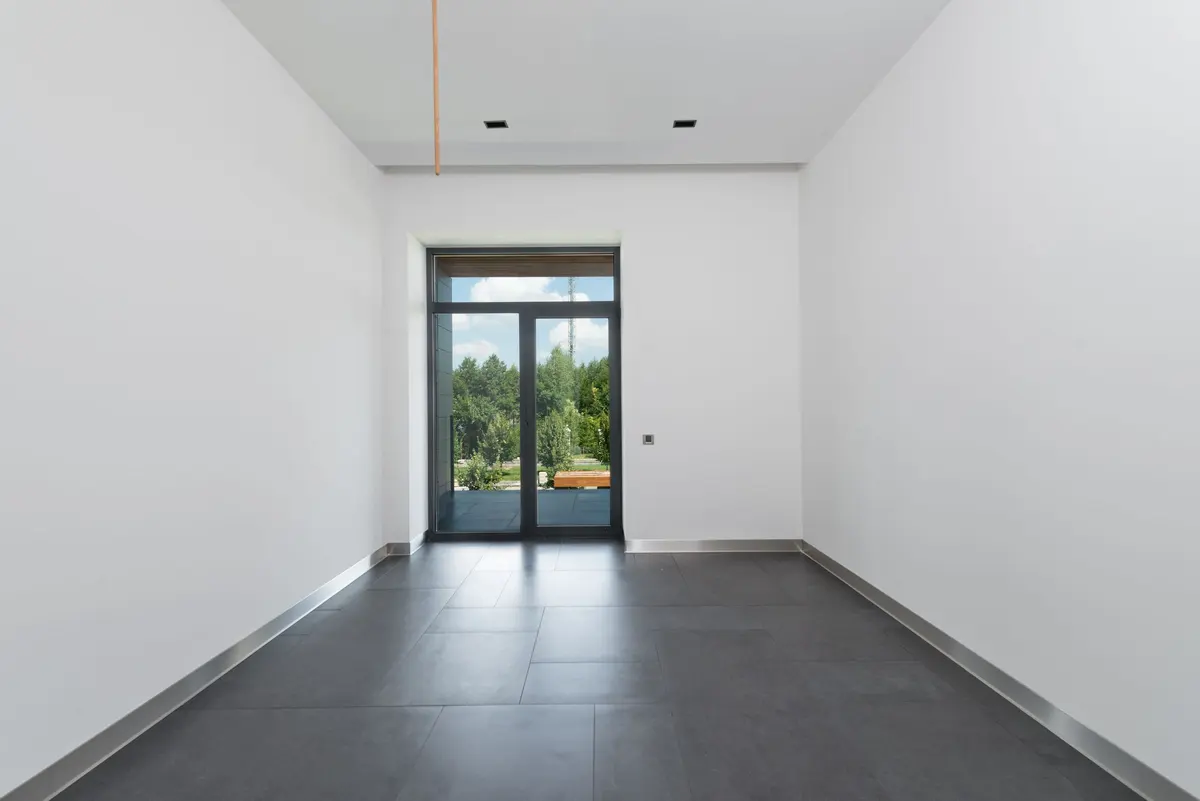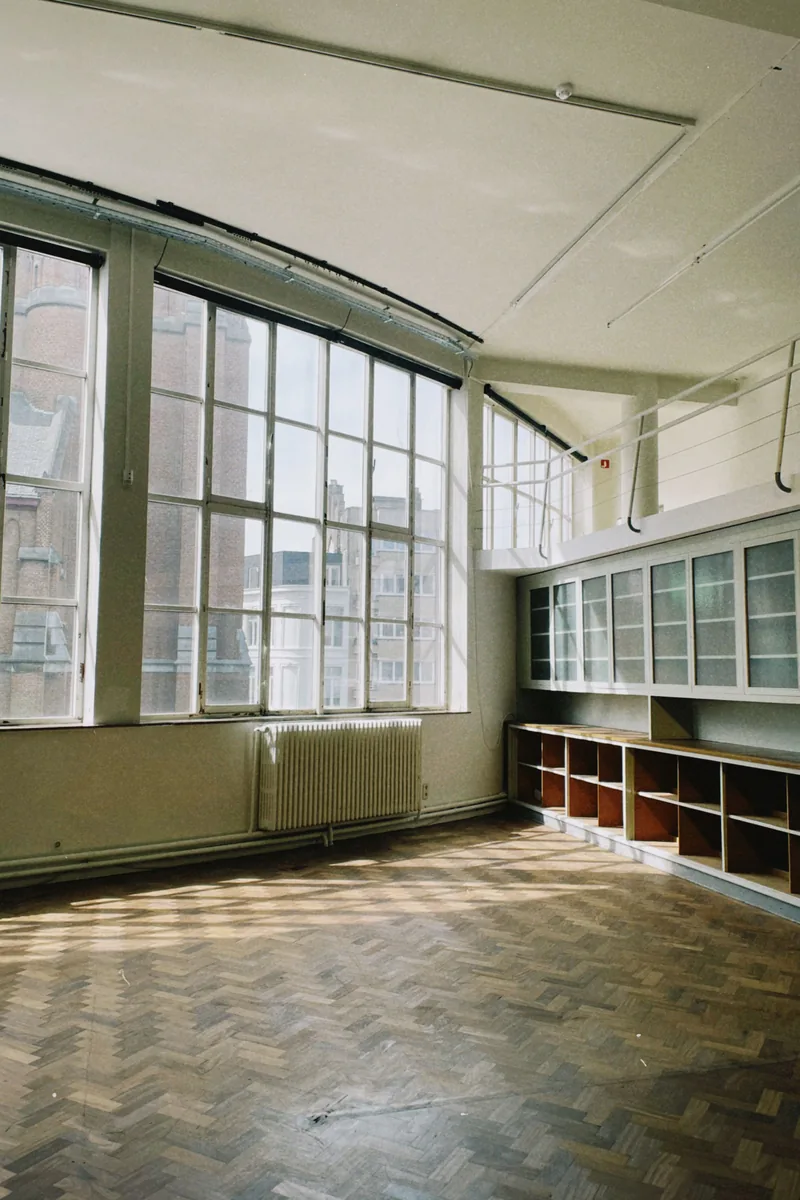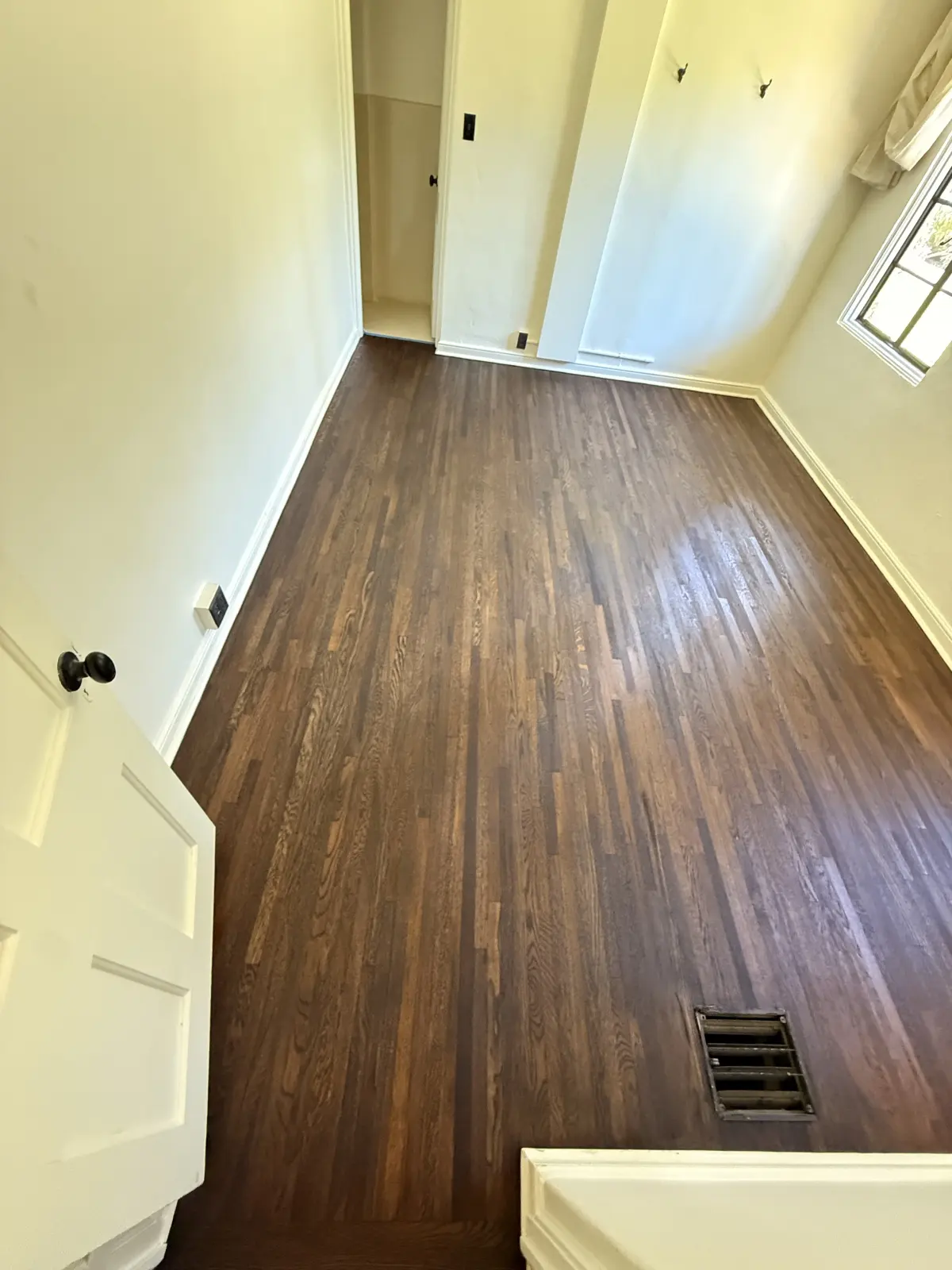
Nobody goes shopping for floor demolition. It shows up on the estimate, it is not the part anyone was picturing, and it is quietly the line that decides whether the new floor sits flat and stays flat.
It is also where most of the surprises on a flooring job live, because until the old floor is up nobody — including us — can see what is under it. Here is what actually happens, why some materials cost several times more to remove than others, and what to expect underneath.
What you are really paying for
Not disposal. A substrate.
The goal of tear-out is a subfloor that is clean, sound, dry and flat enough for whatever goes on top. Every new floor telegraphs what is under it. A luxury vinyl plank floor will show a hump in the slab within a few months. A glue-down floor will not bond to residue. Wood will not sit still over a damp substrate.
So removal is really three jobs stacked together: taking the old floor off, getting the leftovers off after it, and correcting whatever the old floor was hiding.
Why the material matters so much
Removal costs vary by a factor of several between materials, and it is almost entirely about what holds the old floor down.
**Carpet and pad** is the fastest thing to take out. Carpet is cut into strips and rolled, pad comes up behind it, and the tack strip around the perimeter comes off. The volume of debris is large but the labor is light. The one thing that slows it is pad that was glued rather than stapled, which is common over slabs and leaves residue.
**Floating floors** — click-together laminate and floating luxury vinyl — come up quickly because they were never fastened to anything. Sometimes they come up in whole planks.
**Glue-down vinyl and glued LVP** is a different job entirely. The plank comes up in pieces and the adhesive stays behind, and the adhesive is the work. Scraping, grinding and sometimes chemical removal, all of it slow and all of it necessary, because nothing bonds reliably to old adhesive.
**Ceramic and porcelain tile** is the most expensive floor to remove and it is not close. Tile set in a mortar bed over a slab has to be broken out, and the thinset underneath has to be ground off afterward. It is loud, it produces a great deal of dust, and it can take longer than installing the new floor does. If your quotes for a job differ by thousands and you have tile coming out, this is usually where the difference is.
**Nailed hardwood** over a wood subfloor comes up reasonably well, but every fastener has to come out or be set below the surface, and boards frequently take a layer of the subfloor with them.
The layers nobody expects
Older houses have been refloored before, and often more than once. It is normal to find a second floor under the first, and occasionally a third — vinyl over vinyl, tile laid straight over an older sheet vinyl, carpet over the original hardwood.
Two consequences. Each additional layer is additional removal that nobody quoted, and each layer changes the finished floor height, which affects doorways, thresholds, appliance clearances and how the floor meets the stairs and trim.
The way to avoid finding out on day one is to look before you schedule. Pull back a corner of carpet in a closet, or lift a vinyl tile in a laundry room. Five minutes with a utility knife in a spot nobody sees tells you and us a great deal.
A word about older buildings
Some resilient flooring and flooring adhesive manufactured before the 1980s contains asbestos — the old nine-inch vinyl-asbestos tile and the black cutback adhesive under it being the well-known examples. It is not dangerous while it is sitting there intact. It becomes a concern when it is broken up, which is exactly what removal does.
If your house or building dates from that era and you have original resilient flooring, the correct step is testing before demolition, not a judgment call from the sound of it. This applies to a lot of the older commercial stock as well as to houses. It is a small cost and it is the right way round.
We would rather raise this before a job than discover it during one.
What we find under floors around here
The pattern is fairly consistent across Kaufman and Rockwall County.
**Newer slabs** — the Devonshire and Gateway Parks builds in Forney, the 2016-onward belt in Rowlett — are usually flat, young and clean. The tear-out is straightforward and the prep is light.
**Older slabs** are rarely flat by current standards. Slabs from the 1970s and 1980s were poured to a tolerance that suited carpet, which forgives everything, and thin click-together vinyl telegraphs every bit of it. Grinding high spots and filling low ones is normal work here rather than an exception.
**Wet areas** are where the real finds happen. Under a kitchen or a bathroom floor, a supply line or a toilet flange that has been weeping quietly for years leaves damaged subfloor that has to be cut out and replaced. Nobody knows it is there until the floor comes up, and it is the most common single cause of a change order on a flooring job. Bathroom floors in particular deserve a look before the schedule is set.
**Slab moisture** is the invisible one, and it is why wood floors over a North Texas slab need testing rather than assumptions.
Dust, noise and living through it
Tile demolition is the loud one. Expect a genuinely disruptive day or two, plan for pets and anyone working from home, and expect dust to travel further than seems reasonable.
Containment helps a great deal and is worth asking about — plastic barriers over doorways, dust extraction on the grinders rather than open cutting, and covering the route the debris takes out of the house. It does not eliminate dust. It does keep most of it out of the rest of the building.
Also worth agreeing before the day: where the dumpster goes, which door the debris travels through, and whether the driveway needs protecting.
If you want the numbers rather than the process, what floor removal costs prices each type of floor on a slab.
What a good removal line looks like on a quote
It should say what is being removed, whether disposal is included, and what happens if something is found underneath.
That last part is the one people skip, and it is the one that matters. An honest quote either carries a stated prep allowance or says plainly that subfloor repair will be priced when the floor is up. Both are fine. A quote that is silent about the subfloor is not a cheaper quote — it is an incomplete one, and the difference arrives later as a change order.
We write removal and prep as their own lines, we look at what we can before we quote, and we tell you what we expect to find. Book a free estimate and we will start by looking under a corner.