A bathroom asks more of a floor than any other room in the house. Standing water at the tub and the shower door, steam twice a day, temperature swings, cleaning products, and in a family bathroom a genuinely aggressive amount of splashing.
Plenty of flooring is sold as suitable for bathrooms. Rather fewer materials actually are. Here is the honest ranking, and then the part that matters more than the material.
Waterproof and water-resistant are not the same word
This is the distinction that decides most bad bathroom floors, and the marketing does not help.
**Water-resistant** means the surface will shrug off a spill you wipe up. **Waterproof** means water can sit on it, or get under it, without destroying it.
A bathroom needs the second one, because a bathroom does not only get spills. It gets water that runs to the low point, finds a seam, and sits underneath where nobody sees it for two years. The failure is almost never the visible surface. It is what happened below.
Porcelain and ceramic tile
This is the right answer for most bathrooms and it is not a close call.
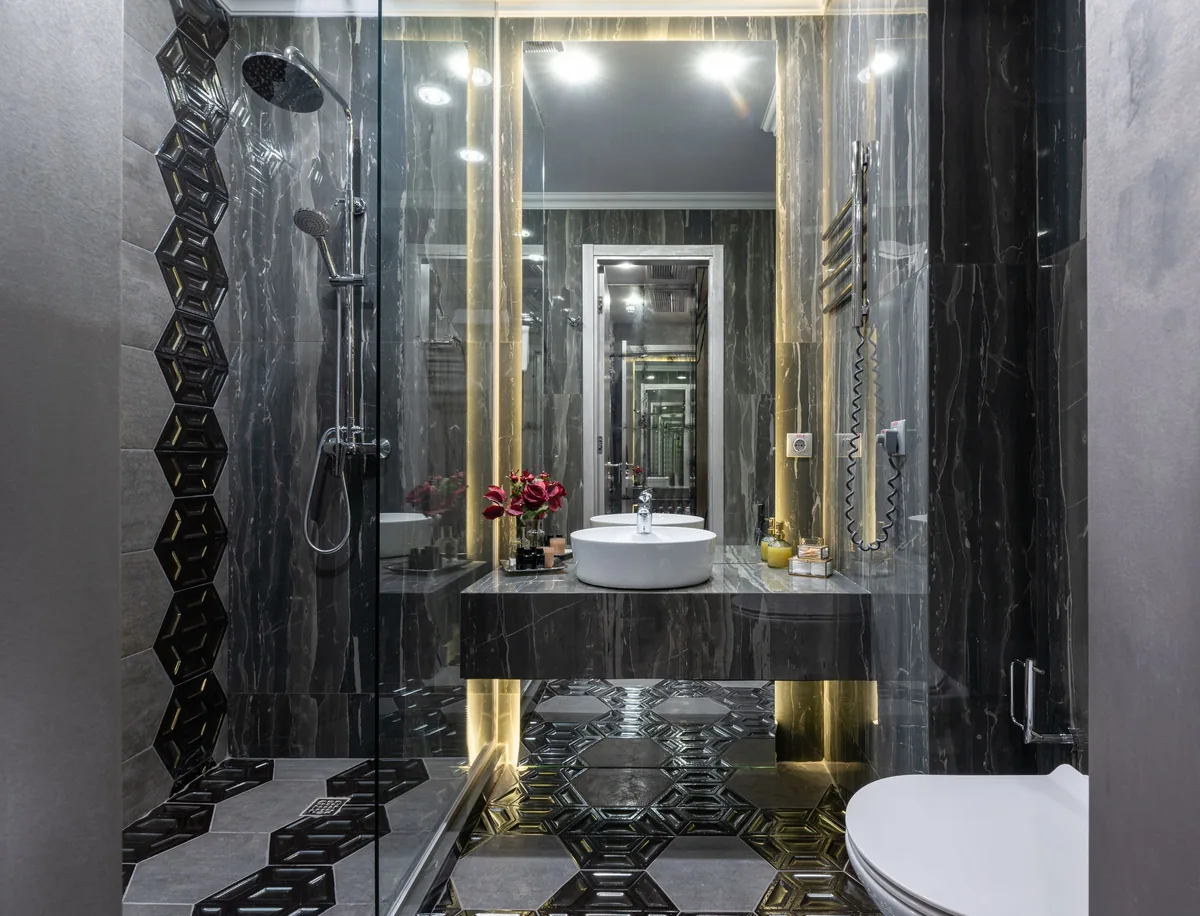
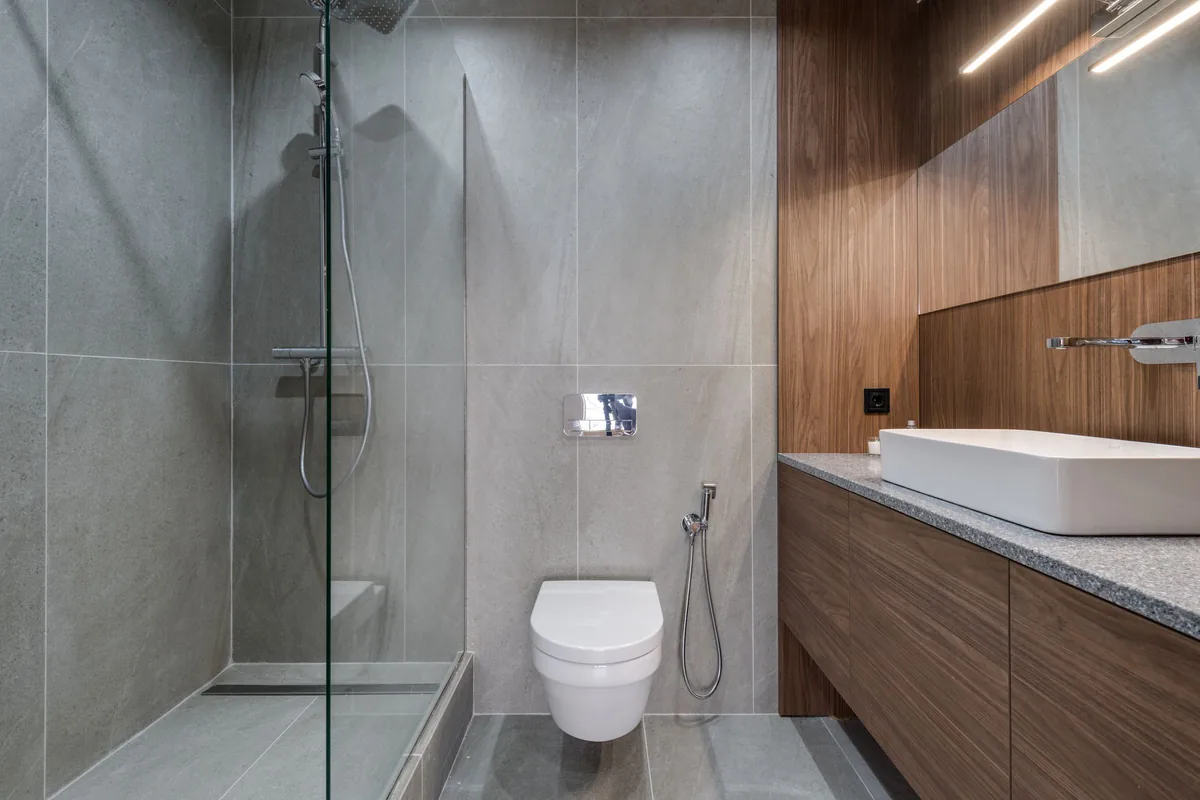
Porcelain is fired denser than ceramic and absorbs very little water, which is what makes it genuinely waterproof rather than merely resistant. It does not care about steam, it does not care about standing water, it takes cleaning products, and it lasts effectively as long as the house.
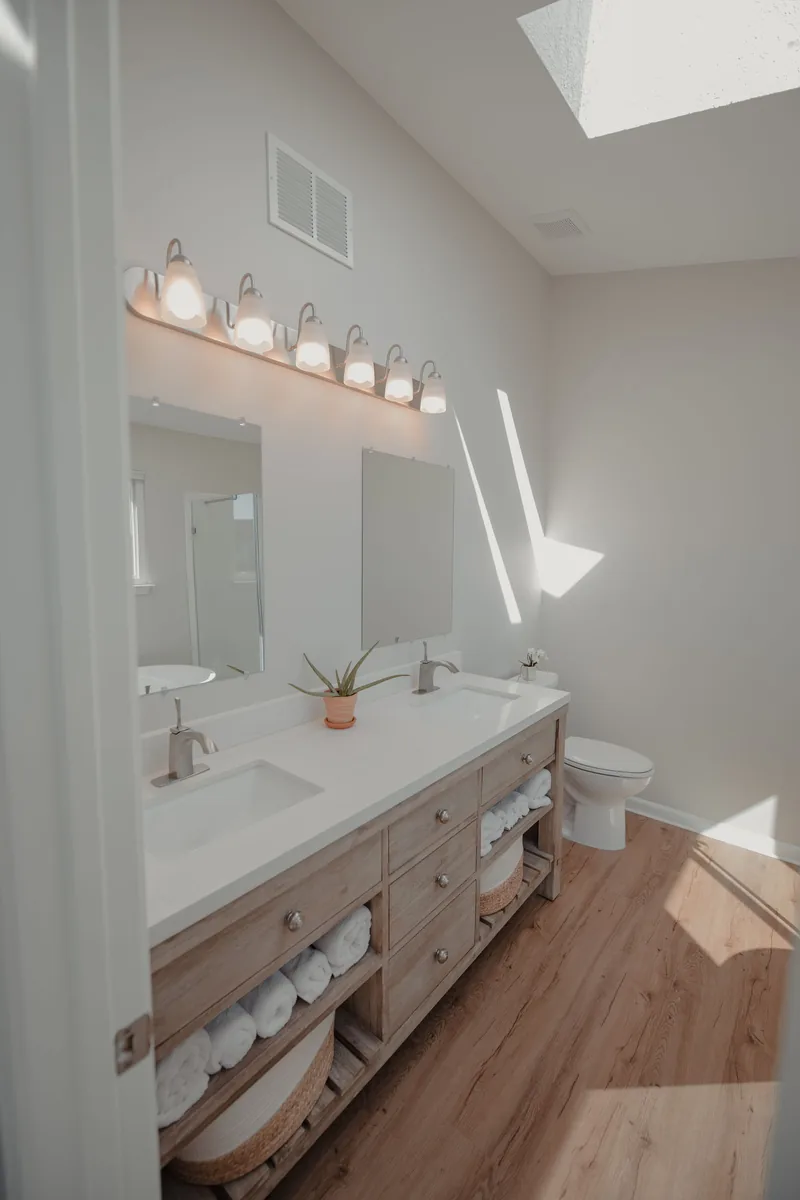
It also gives you the widest choice of look, including wood-look planks that give you the warmth of wood in a room where actual wood is a bad idea.
The trade-offs are real and worth knowing. It is cold underfoot, which matters more in January than people expect. It is hard, so anything dropped on it breaks. And grout is porous — sealed grout resists staining, unsealed grout does not, and grout is the maintenance item in a tile floor rather than the tile.
Slip resistance is worth asking about specifically. A large-format polished tile is beautiful and it is slick when wet. Smaller tiles, more grout lines, or a textured finish all give you more grip, which matters in a bathroom used by children or by anyone unsteady on their feet. Our tile work covers the options.
Luxury vinyl plank
The strong second answer, and sometimes the first one.
Modern LVP is fully waterproof through the body of the plank, warmer and softer underfoot than tile, quieter, and considerably cheaper installed. For a secondary bathroom, a rental, or a household that wants the whole floor to run in one material from the hallway through the bath, it makes a great deal of sense.
Two things to get right. The seams matter more in a bathroom than anywhere else, so the perimeter and any penetrations want proper detailing rather than a quick job. And in a bathroom the subfloor still has to be flat and dry — waterproof plank over a wet substrate is still a problem, it just takes longer to show.
Luxury vinyl is the fastest bathroom floor to install and the easiest to live through.
Sheet vinyl
Underrated for bathrooms, and genuinely the most watertight option in one specific way: it can be installed with very few seams, sometimes none at all in a small bathroom, so there is simply nowhere for water to get through.
It costs less than everything above it. It reads as more basic, which matters for resale in some houses and not at all in others. For a utility bathroom, a laundry room or a rental unit it is a sensible, honest choice that people dismiss too quickly.
Laminate
Be careful here, and read the specification rather than the marketing.
Traditional laminate has a fiberboard core. Fiberboard and standing water are a bad combination — the core swells, the edges lift, and it does not go back. A laminate floor that has taken water at the shower door is not repairable, it is replaceable.
There is now genuinely waterproof laminate with a different core construction, and it is a different product. If you want laminate in a bathroom, that is what you want, and it is worth confirming in writing rather than assuming.
Hardwood, and why we usually say no
Real wood in a full bathroom is a material fighting its environment every day. Steam, splashing, and the temperature swing between a hot shower and an air-conditioned house all work against it, and wood responds to moisture by moving.
In a powder room with no shower or tub it can be fine, and it often looks right where the bathroom opens off a wood-floored hallway. In a full bathroom it is a maintenance commitment, and over a slab it stacks that problem on top of the moisture a slab already sends upward.
The usual answer is wood-look porcelain, which gives you the look with none of the argument.
Carpet
No. Not in a full bathroom.
It holds moisture, it holds what comes with the moisture, and it does not dry properly in a room that gets re-wetted every day. It is worth saying plainly because it still turns up in older houses, and it is one of the few flooring choices with a genuine hygiene problem rather than just an aesthetic one.
The part that matters more than the material
What is under the floor, and what is behind the shower.
Tile and grout are not a waterproofing system. Grout is porous and water passes through it. What keeps water out of the structure is the waterproofing membrane and the correctly sloped, correctly built substrate underneath — and all of it disappears the moment the tile goes on. What goes behind the tile in a shower remodel walks through that assembly layer by layer.
This is why failed bathrooms are almost always failures of what is behind the tile rather than of the tile itself, and why a bathroom quote that comes in dramatically lower deserves a specific question about how it is waterproofed. It is the one place in the job not to economize, because it is the one part you cannot inspect later and cannot fix without taking the room apart.
The same logic applies at the floor. Penetrations at the toilet flange and any pipework want detailing rather than caulk and optimism, and in a wet room the transition at the door is doing real work.
Two details people forget
**Heated floors.** Electric mat under tile is a modest cost at installation and impossible to add later without taking the floor up. In a tiled bathroom it removes the single biggest complaint about tile. If there is any chance you want it, decide before the floor goes down.
**The transition at the door.** A bathroom floor is often a different material and a different height from the hallway outside it, and that junction takes water, feet and a door swing. It is a small detail that gets skipped and then annoys people daily — stairs, transitions and trim covers what the options are.
Coming to a decision
If you want the floor that lasts longest and you do not mind it being cold: porcelain tile, with a heat mat if the budget allows.
If you want warmth, quiet, a lower price and a faster job: luxury vinyl plank.
If it is a utility space or a rental: sheet vinyl, and do not feel bad about it.
If the rest of the bathroom is fine and only the floor needs replacing, replacing just the bathroom floor covers what happens to the toilet, the vanity and the tub edge, and why the height at the door often decides between plank and tile.
We do full bathrooms as well as bathroom floors, across Forney, Rockwall, Terrell and the rest of Kaufman and Rockwall County. Bring the rest of the room to the conversation — the vanity, the tile going on the walls, whether the shower is changing — because the floor is the one decision that has to work with all of them. Book a free estimate and we will look at the whole room.