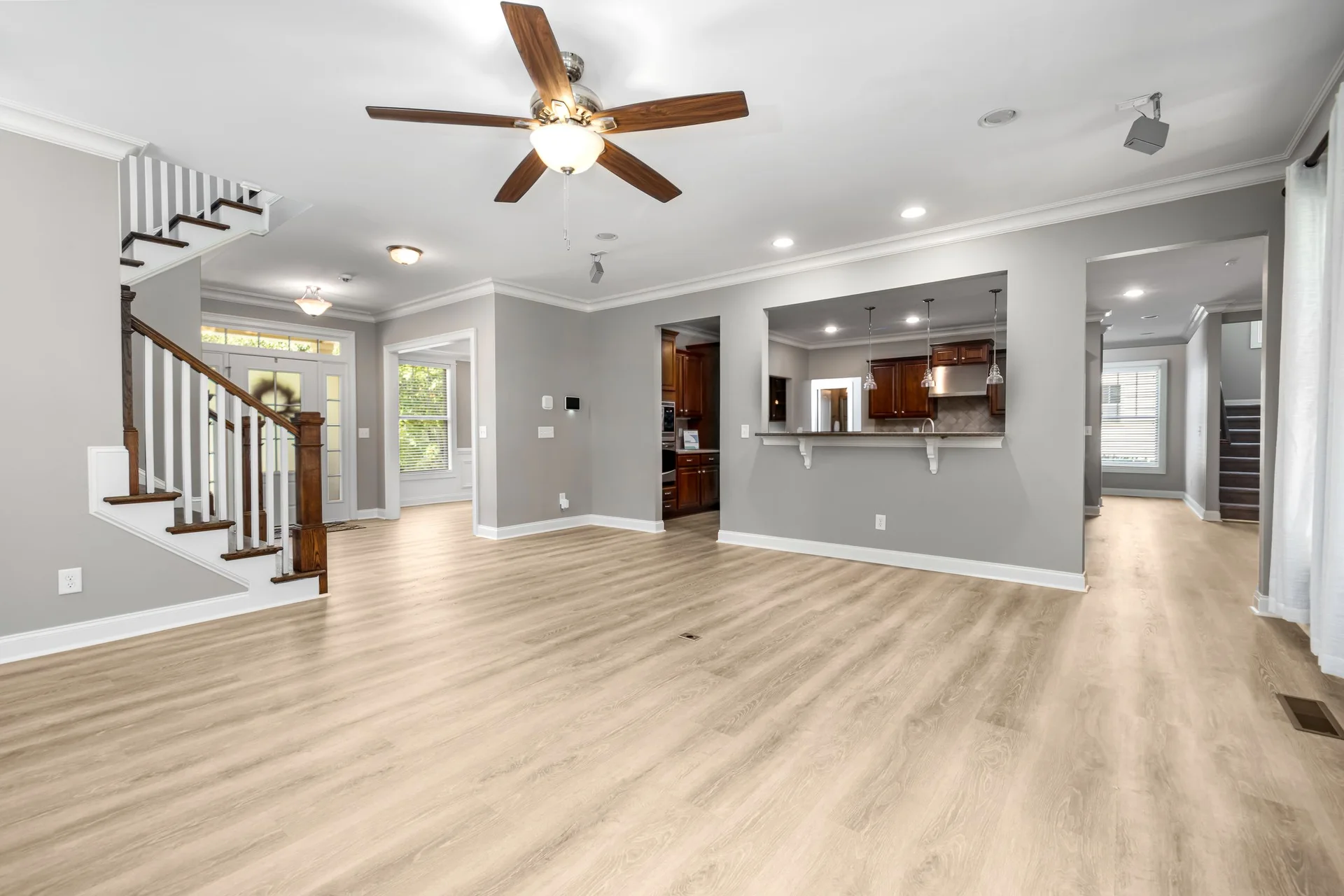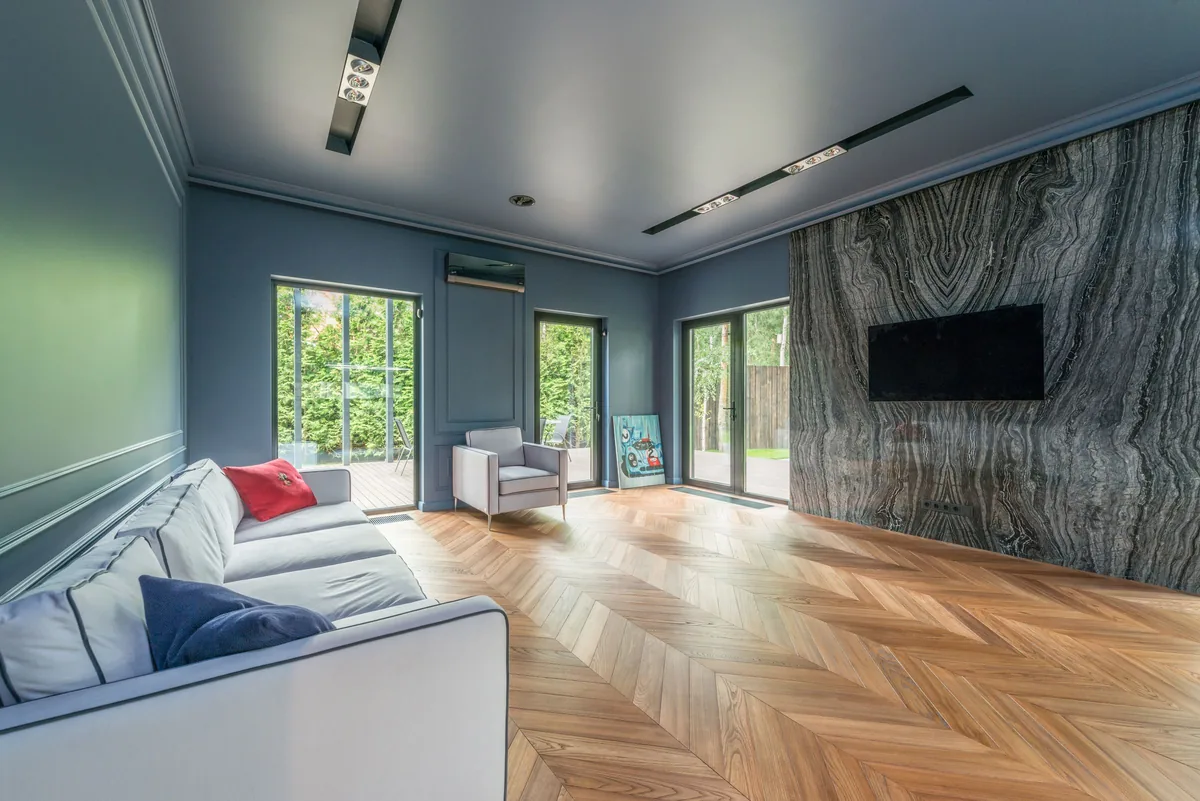
Laminate has the hardest surface of any floor most people will buy. The aluminum oxide in the top layer is harder than a urethane finish on oak and harder than the wear layer on vinyl plank, which is why claws, chair legs and tracked grit barely mark a good one.
So when a laminate floor fails, it is almost never the surface. It is the core, the slab under it, or the way it was put down. Here is how to read what you are seeing in a house in Forney, Rowlett, Royse City or anywhere else on this clay.
First, make sure it is laminate
Laminate and vinyl plank look alike once they are down, and they fail in different ways. Two quick checks:
- Tap it. Laminate rings slightly hollow and bright. Vinyl answers with a duller, softer sound.
- Find a cut edge, where a floor register exposes one. Laminate shows a brown compressed fiber core. Vinyl shows a uniform gray or off-white composite.
Vinyl also feels warmer to the hand, and a loose vinyl plank flexes where laminate snaps. If it turns out to be vinyl, vinyl plank floor problems is the post you want.
Swollen, raised edges along the seams
This is the one laminate problem everyone has heard of, and the cause is nearly always the same: water reached a seam and the core drank it.
A laminate plank is a high-density fiberboard core under a printed layer and a hard melamine top. Fiberboard swells when it absorbs water and it does not shrink back. A swollen edge is a permanently swollen plank.
The usual sources:
- A dog bowl tipped against a seam and found in the morning, or a pet accident left overnight.
- A dishwasher, refrigerator line or washing machine that leaked while nobody was looking. In a kitchen, an overnight supply line leak ruins laminate at the core.
- A steam mop, which drives moisture straight through the joints. It also voids the warranty on essentially every laminate sold.
- Wet shoes and a mudroom, or a full bathroom or laundry room, which are rooms laminate should not have gone into.
Waterproof-rated laminates are a real improvement, and they hold surface water off for hours instead of minutes. But the rating covers the surface and the joint, and it assumes water gets wiped up rather than left to stand.
Swollen planks get replaced once the water source is found and the slab under them is dry. There is no drying them flat. Keep a carton of leftover planks from any install for exactly this.
Lifting, peaking or what looks like cupping
Solid wood moves across the grain with humidity and opens gaps in winter. Laminate does not. Its core is engineered fiber, so you will not see seasonal gaps open between planks the way you do with oak.
What laminate does do is expand with temperature, as a single floating sheet. That is why it needs a gap at every wall, jamb and island, hidden under trim. When something takes that gap away, the floor has nowhere to go and lifts at the joints. What looks like cupping on a laminate floor is nearly always one of two things:
- Water at a seam, covered above.
- A pinned floor: baseboard or quarter round nailed down into the plank instead of into the wall, a door jamb with no clearance, or a heavy kitchen island or cabinet run sitting on top of the floating floor.
The fix for a pinned floor starts with finding where it is held and freeing it. Stairs, transitions and trim covers why moulding is fastened to the wall and never down into the floor.
Joints opening, or a spot that gives underfoot
A click-lock plank bridges dips in the slab instead of following them. Over a low spot, the plank is unsupported, so it flexes under every step. Within a year or so, the joints over that spot work loose and open.
On the Houston Black clay under Kaufman and Rockwall counties, slabs crown and dip with the seasons, and a house that looks level can be well out of tolerance. Prep is the prevention: high spots ground down and low spots filled before the floor goes in. Skipped prep rarely shows on handover day. It shows around the twelve-month mark.
The other cause is padding. Underlayment cushions the floor and absorbs small inconsistencies, but a plank that already has a pad attached should have nothing else under it. Stacking a second pad makes the floor too soft, the joints flex, and the locking edges eventually give out.
Swelling with no spill you can find: moisture from the slab
Concrete is never as dry as it looks. A slab sitting on clay that has soaked through a wet spring pushes vapor up from below, and a fiberboard core takes it in. That is why laminate over concrete goes down on a poly film moisture barrier, or a combined pad and film, with every seam lapped and taped.
If edges are swelling across a room with no obvious leak, a missing or gapped moisture barrier is worth suspecting.
A loud click and a hollow sound
Some of this is simply what laminate is. A fiberboard core over a pad is firmer and more resonant than a foamed vinyl plank, so heel strikes and dog nails make a distinct click. Upstairs, that noise carries into the room below.
It also feels cooler and more solid, closer to real wood, which is why plenty of people prefer it. If you are choosing between the two, stand on both before the order goes in. Luxury vinyl plank vs laminate lays the comparison out.
A dull walkway or scratches that do show
On a current laminate, wear is rarely the surface giving up. More often it is one of these:
- Grit. Sand dragged under a mop head is what dulls a surface that would otherwise last decades. Sweep before you mop, and use a well-wrung microfiber mop or a laminate cleaner sprayed onto the pad, not the floor.
- The wrong AC rating for the room. AC3 is a sensible floor for bedrooms and a normal living room. An entry, a hallway, a home office with a rolling chair, or a house with a dog wants AC4. AC5, which is commercial rated, is right when several kids and a large dog share the house.
The AC number measures how the surface resists wear. It says nothing about how the core reacts to water, and it does not convert to the mil rating on vinyl. A good AC4 laminate will out-scratch a twelve-mil vinyl plank, and the vinyl will outlast it by years in a laundry room. The best flooring for dogs goes further into that trade.
Rooms where it should not have gone
If the trouble is all in one room, look at the room. Full bathrooms, laundry rooms, and mudrooms where wet shoes and a dog bowl live are poor places for any fiberboard core. Kitchens are the argument: a waterproof-core laminate with a silicone-sealed perimeter and a pan under the dishwasher does well, and plenty are down in Kaufman County doing fine, but the kitchen is where people who chose laminate most often wish they had not.
In those rooms, rigid vinyl plank or tile is the safer floor, and it is common to run laminate through the living areas and vinyl in the wet rooms, matched closely enough at the doorway that nobody notices.
Having it looked at
If your laminate is swelling, lifting or opening up, we will come out, find what is causing it, and tell you whether it is a few planks, a pinned edge or a reinstall. The estimate is free, and the work is done by our own crew and carries a one-year labor warranty. Book your estimate here.