Between April 2020 and July 2024 the Census Bureau had Forney as the fastest-growing city in the country, and almost all of that growth arrived as fresh slab in Devonshire, Gateway Parks, Travis Ranch, Windmill Farms and Clements Ranch, plus the 2,000 acres of Heartland filling in down I-20. If you bought one of those houses, the floor under your feet was chosen by a builder buying for hundreds of houses at once, to a price, to look right on the day of the walkthrough.
It was not chosen badly. It was chosen to last exactly long enough. This is what it is, when it gives out, what to replace it with, and the two things about these particular houses that change the answer.
What the builder actually put in
Walk through any production build in Kaufman County from the last twenty years, from Bloomfield, Chesmar, Highland, KB, Pacesetter, HistoryMaker or any of the others, and the flooring package is nearly identical.
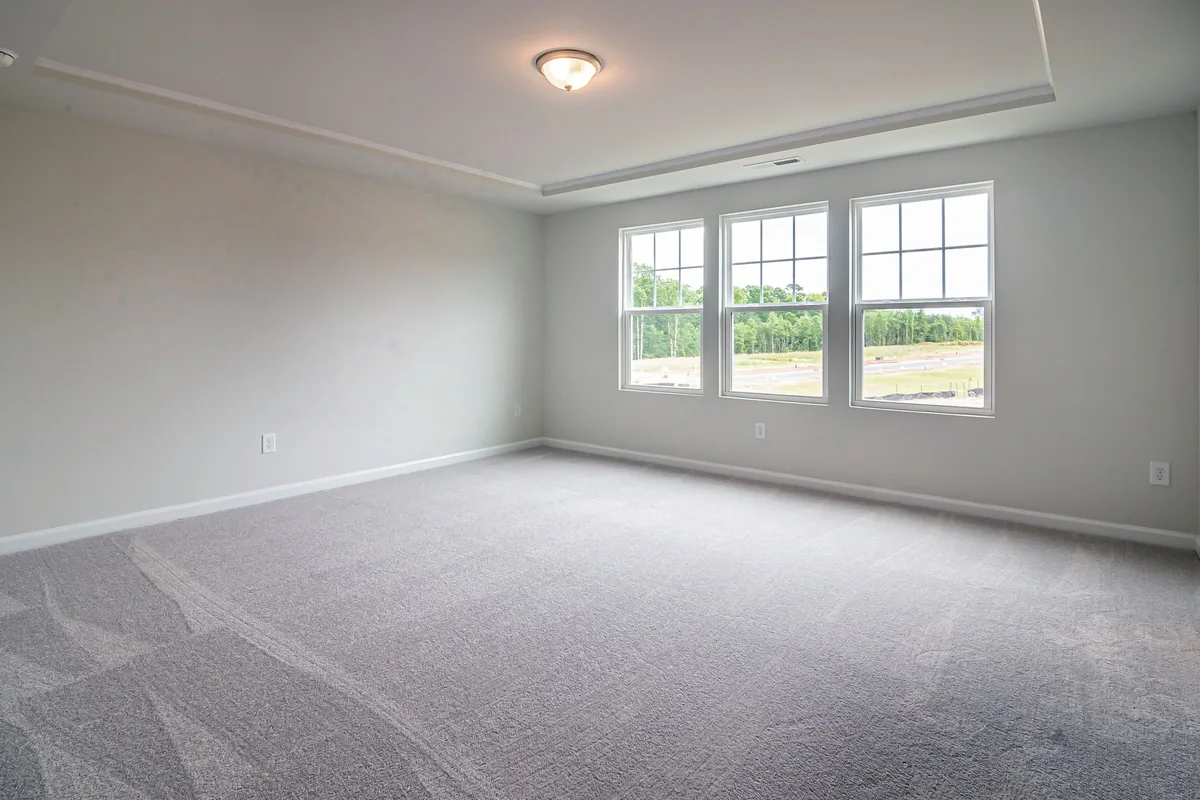
The bedrooms, the stairs and often the family room got carpet: a low face-weight polyester in a cut pile, over the thinnest pad that met the builder's specification. Polyester takes color beautifully and resists stains reasonably well, which is why it photographs so nicely in a model home. What it does not do is recover. Once the fibers are crushed by traffic they stay crushed, and the pad under them compacts within a couple of years, after which the carpet is being ground against the slab with every step.
The kitchen, the entry, the baths and the laundry got an entry-level vinyl: sheet vinyl in the older builds, a thin glue-down or click plank in the newer ones. It is waterproof and it is flat, and it is thin enough that the pattern repeat is visible from the doorway.
Upgrades were offered at the design center at a markup that made most people decline them. So the base package is what most of these houses have.
The six-year pattern
We see the same timeline across Forney, Heartland, Crandall and the newer half of Royse City. Years one to four the carpet looks fine. Around year five the hallway from the garage door goes, then the stairs, then the path from the family room sofa to the kitchen. By year six or seven the difference between the walked-on parts and the guest room is impossible to unsee, and no cleaning changes it. It is not dirt. It is matting, and it is permanent.
The vinyl lasts longer but dates faster. It is the first thing a visitor's eye lands on in an open-plan entry, and by the time the carpet is due, the vinyl usually looks like what it is.
The useful thing about a predictable failure is that you can plan for it rather than treat it as an emergency. If your house is coming up on that mark, the whole main floor at once is a better project than a room at a time.
Option one: one hard surface through the main floor
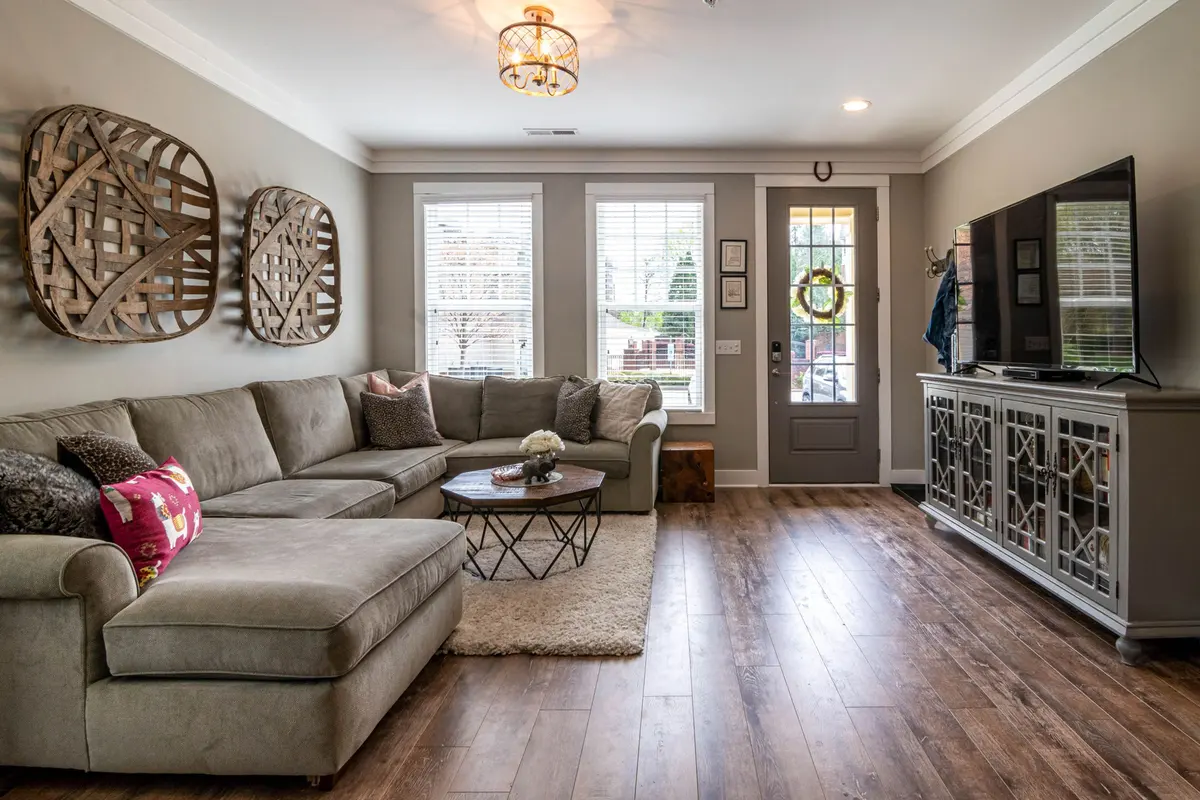
This is what most Forney families end up doing, and the floor plans are the reason. A 2010s production build here is an open plan: entry flowing into a kitchen flowing into a breakfast area and family room, with the builder's carpet meeting the builder's vinyl at an arbitrary line somewhere near the island.
Running one continuous hard surface through all of it removes that line, makes the space read considerably larger, and solves the traffic-lane problem permanently, because the traffic lane is exactly where the carpet was failing.
Luxury vinyl plank is the usual answer, and in these houses it is a particularly good one. It is waterproof, which matters in a house where the kitchen, the back door and the dog's bowl are all in the same room. It floats, which matters for the reason in the next section. And because the builder's vinyl is flat and fully bonded, a floating LVP can often go directly over it in the wet areas, which skips the most expensive removal in the house. Luxury vinyl plank vs laminate is worth reading if you are weighing the two.
Engineered wood is the step up if you want the real thing and are planning to stay. It can be glued to a slab, but only a tested one, which is the second thing about these houses.
The two things about a Forney slab
**It is still drying.** Every one of these houses sits on a concrete slab poured on Kaufman County's Blackland Prairie clay. Concrete passes water vapor upward for the life of the building, and a slab that is two or three years old can still read high on a moisture test. That is fine for a floating floor, which sits on an underlayment and is not attached to the concrete. It is not fine for anything glued, and it is not fine for wood, without a test first and a proper vapor retarder. If a company proposes to glue anything down in a new Forney house without putting a meter on the slab, that is a warning sign. Hardwood floors on a North Texas slab explains what happens when this is skipped.
**It is still moving.** The clay under these subdivisions shrinks in a dry summer and swells when the rain comes back, and a new slab settles for the first several years on top of that. Most of it is harmless. What it means for a floor is that a floating floor needs its full expansion gap at every wall and must never be pinned under a cabinet toe kick or a heavy island, because when the slab moves, the floor has to be free to move with it. It also means that if there are already doors sticking seasonally and cracks opening above frames, the flooring project should wait until someone has looked at the foundation.
Option two: better carpet where carpet belongs
Bedrooms still want something soft and quiet, and the gap between what a builder buys and what you can buy is large.
The fiber is the first decision. Nylon is the durability benchmark with real resilience, so it springs back rather than staying crushed. Triexta is the standout for stain resistance and holds up well underfoot, which makes it the default recommendation for a house with young children. Polyester is still a legitimate value choice for a guest room; it just should not go anywhere with traffic. Then twist and density, which predict how a carpet ages far better than the price does. And then the pad, which is where we tell people not to save money, because a good pad makes a mid-grade carpet feel and last like a better one. Carpet for a kid's room goes deeper on the fiber choice.
The two rooms where it is a close call
**The stairs.** They wear fastest, they are the most visible thing in a two-story entry, and they are the most expensive part of the job per square foot because every tread is fitted individually. Carpeted stairs are warmer, quieter and safer with small children. Hard-surface stairs look better and last far longer. Decide deliberately rather than by default, and stairs, transitions and trim covers what the work involves either way.
**The upstairs hallway and game room.** In most of these floor plans the game room is a bridge overlooking the entry, so it is on display, and it carries every trip between the bedrooms. Carpet there is quieter for anyone sleeping underneath. Hard surface there should match the stairs if the stairs are going hard. Whichever way you go, the hallway and the stairs should agree.
Doing it in stages without regretting it
Most people do not do the whole house at once, and staging is fine with one rule: buy the full quantity of any one material at the same time. Carpet and plank are made in dye lots, and the same product bought eighteen months apart can be visibly different once it is on the floor next to the first batch. If bedrooms are phase two, order their carpet with phase one and store it.
The natural break is by floor, not by room. Main floor first, upstairs later, so the change happens at the top of the stairs where it looks deliberate.
What it costs and where to start
Whole-house numbers depend on the material and how much of the builder's floor can stay under a floating LVP, and what it costs to floor a whole house in North Texas lays the ranges out. The honest number comes from an in-home measure, because it depends on a moisture reading and a look under the corner.
Estimates are free, we bring the samples to the house so you can see them against your own cabinets and light, and we can usually start within a couple of days of the material arriving. Book one here. If it helps, financing through Wisetack and Synchrony is available for the whole project.