Every real estate agent in Rockwall and Forney has the same conversation with sellers. The carpet is worn, the vinyl in the kitchen is dated, and the seller wants to know whether to spend money on a house they are leaving. The agent usually says yes. The seller usually suspects the agent just wants a nicer listing.
The agent is usually right, but not for the reason sellers assume. This is when replacing flooring before a sale pays, when it does not, what to install when it does, and the cheapest version that still works.
Why flooring matters more than almost anything else you could fix
Flooring is the largest surface in the house and the first one a buyer sees in every listing photo and every room they walk into. A buyer does not consciously evaluate it. They register whether the house feels finished or feels like a project, and the floor is most of that impression.
The financial logic is not that new floors add their cost to the appraisal. They do not, reliably. It is that worn floors give a buyer a specific, visible, easy-to-price reason to offer less. A buyer looking at matted carpet through a two-story house does a rough mental estimate of replacing it, rounds up because they are guessing and because they do not want the hassle, and knocks that number off the offer. That number is almost always bigger than what the floor would have cost you to replace, and they will ask for it in the inspection negotiation if they did not get it in the offer.
So replacing floors before a sale is not an investment in the house. It is removing the most expensive objection a buyer can raise.
When it clearly pays
**The carpet is visibly worn in the traffic areas.** Gray lanes, matted stairs, a path from the sofa to the kitchen. This is the case for most houses in Forney's newer subdivisions coming up on their first sale, because the builder's carpet was specified to last about as long as the first owner stayed. Replacing builder-grade flooring in a Forney new build covers what it was and what goes in.
**There are pet or smoke odors.** Odor lives in the carpet pad, and no cleaning removes it. Buyers walk in, smell it, and leave. This one is not optional if you want a normal sale.
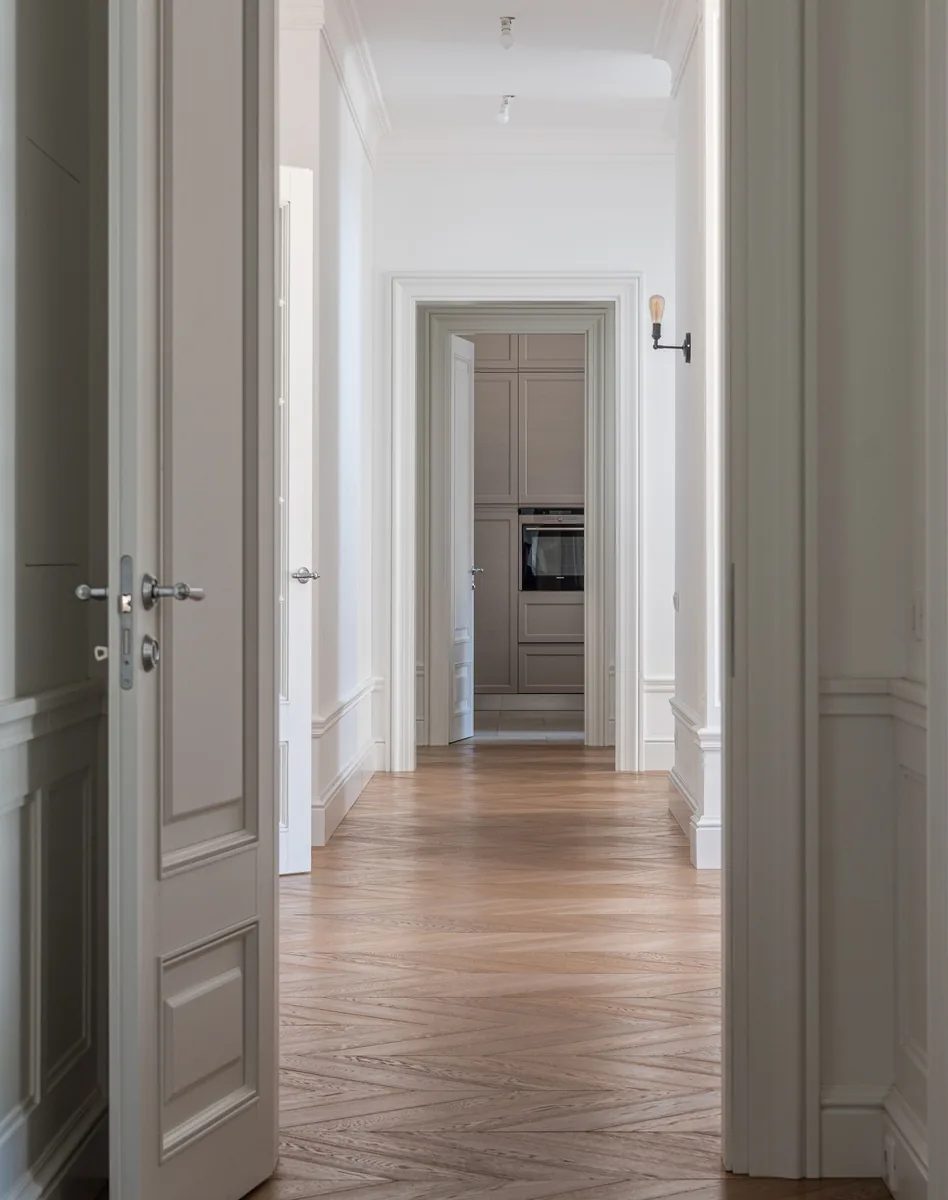
**The main floor is chopped into different materials.** Carpet meeting tile meeting laminate meeting vinyl, in an open plan. Buyers in this market expect one continuous hard surface through the living areas, and the transitions read as dated even when each individual floor is fine.
**The house is priced for a family buyer.** In the family neighborhoods, Waterstone and Breezy Hill in Rockwall, Devonshire and Windmill Farms in Forney, the buyers are comparing your house against others in the subdivision that may already have been updated. Flooring is where that comparison is won or lost in the photos before anyone visits.
When it does not
**The floors are in genuinely good condition and merely not to your taste.** A five-year-old neutral LVP or a sound, clean carpet does not need replacing because you would have chosen differently. Buyers do not pay you for that.
**You have hardwood under the carpet.** Older houses near downtown Rockwall, Terrell and the older parts of Forney sometimes have oak under decades of carpet. Refinishing it costs a fraction of new flooring and gives you the most valuable floor a listing can have. Pull back a corner in a closet and look.
**The house is a project anyway.** If the kitchen, baths and roof are all dated and the buyer pool is investors and flippers, new floors are money they will tear out. Price it accordingly and let them.
**You cannot do it properly.** A cheap, thin plank thrown over an unprepared slab looks like exactly what it is, and inspectors notice hollow spots and lifting joints. Half-doing it can be worse than leaving worn carpet that the buyer at least prices honestly.
The flooring allowance question
Sellers often propose offering a credit instead. It is tempting because it costs nothing until closing and lets the buyer choose.
It underperforms. An allowance asks a buyer to picture the finished house and to take on a project the week they move in, and buyers discount both. The listing photos still show the worn floor, which means fewer showings, which means a longer time on market, which is its own price cut. And the buyer's number for the allowance will be larger than your number for the job.
Allowances make sense in two cases: when the buyer is an investor who will refloor to their own spec regardless, and when a specific buyer is already under contract and asks for one in negotiation. As a listing strategy, replacing wins.
What to install for a sale
You are not flooring the house for yourself. You are flooring it for the widest possible pool of buyers, which points to a short list.
**Main living areas: luxury vinyl plank in a neutral mid-tone wood look.** Not gray, which has dated, and not the darkest espresso, which shows every speck. A medium oak or a light natural tone photographs well and goes with anything a buyer owns. Luxury vinyl plank is waterproof, buyers recognize it, and it floats over the slab without the moisture testing that glued wood on a North Texas slab requires. A mid-grade product with a real wear layer, not the thinnest one; the difference is small per square foot and visible underfoot.
**Bedrooms: carpet, neutral, on a decent pad.** Buyers with children want carpet in bedrooms, and it is cheaper than running hard surface everywhere. A light neutral, a stain-resistant polyester or triexta, and a pad that does not feel like the builder's. The pad is what makes new carpet feel new when a buyer walks on it in socks at a showing.
**Stairs: match the main floor if they are visible from the entry.** In a two-story Rockwall or Forney house the stairs are in every entry photo. Carpeted stairs that match new bedroom carpet are fine and cost less. Hard-surface stairs that continue the main floor look better and cost more. If the budget is tight, do the main floor and carpet the stairs.
**Wet areas: leave good tile alone.** Sound, neutral tile in a bathroom does not need replacing for a sale. Dated but sound tile in a kitchen can often stay under a floating LVP, which saves the removal cost entirely. What floor removal costs explains when that works.
The cheapest version that still works
If the budget is limited, this is the order of operations. Refinish hardwood if you have it, because the wood is already paid for. Then LVP through the entry, kitchen and family room, because that is what every photo shows. Then carpet the bedrooms and stairs in one neutral. Skip formal dining rooms and offices that already have acceptable floors. Do not skip prep; a floating floor over an unflattened slab telegraphs, and an inspector will write it up.
Timing
Plan for two to three weeks between the floor going in and photos being taken. The install itself is usually a few days for a main floor, and we can typically start within a couple of days of the material arriving, but baseboard has to go back on and be touched up, and the house needs a clean after any flooring job. Do the floors after the painting and before the staging.
Getting a number
The decision is easier with a real figure next to the discount you are worried a buyer will ask for. What it costs to floor a whole house in North Texas gives the ranges by material. The exact number comes from an in-home measure, and ours is free. We bring samples, look under the corner, and give you a written estimate with every line on it, which is also a document your agent can show a buyer if they ask what was done. Book one here. If the timing of the sale makes paying up front awkward, financing through Wisetack and Synchrony is available.